Ultrasonic Testing services in Gauteng, Mpumalanga & South Africa
Ultrasonic Testing services in Gauteng, Mpumalanga & South Africa
ISO 9001 · ISO 9712 · SNT-TC-1A · B-BBEE Level 2 · SAINT Member
ISO 9001 · ISO 9712 · SNT-TC-1A · B-BBEE Level 2 · SAINT Member
Ultrasonic Testing: See Through the Steel Before the Steel Fails
Ultrasonic Testing: See Through the Steel Before the Steel Fails
Ultrasonic Testing: See Through the Steel Before the Steel Fails
Ultrasonic Testing: See Through the Steel Before the Steel Fails
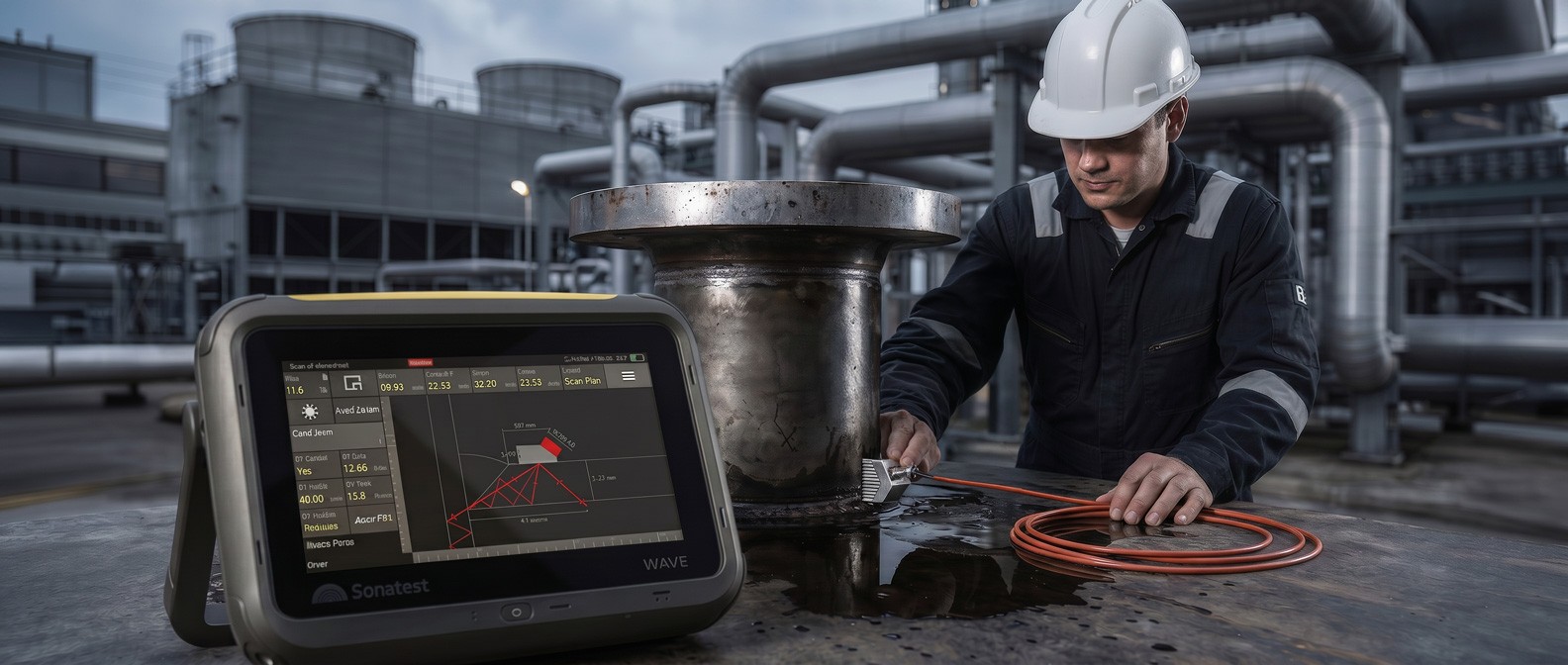
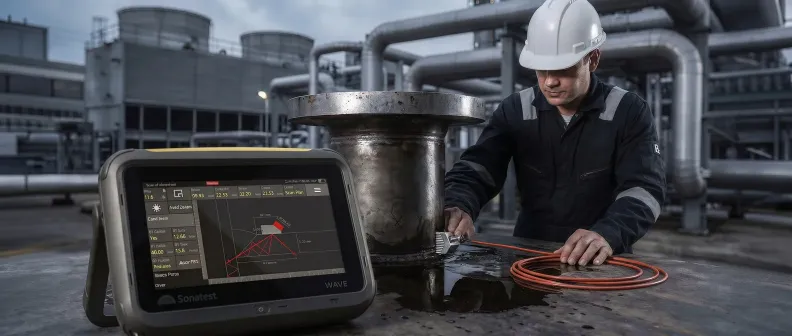
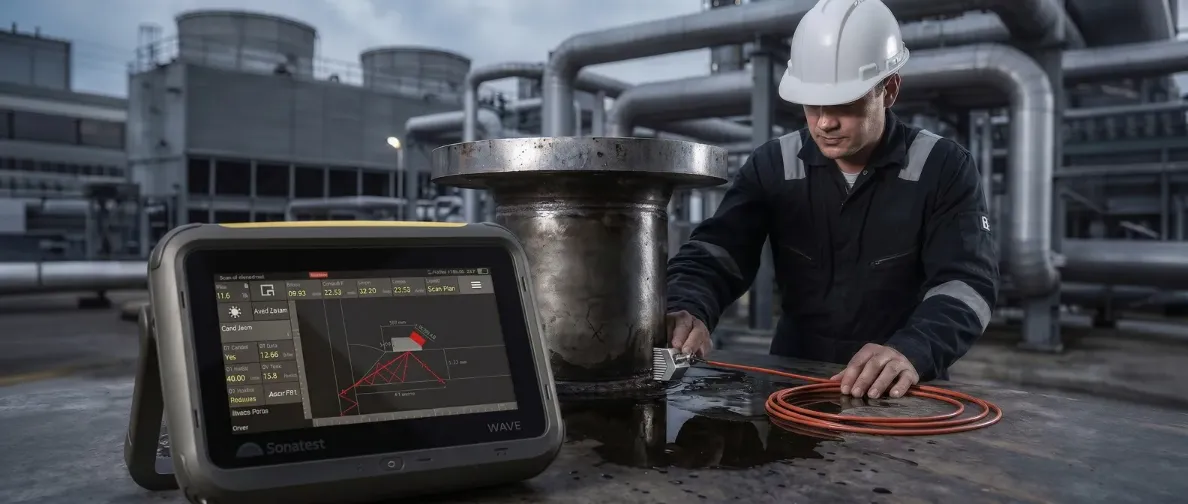
Wall thickness measurement, weld flaw detection, and through-coating ultrasonic surveys across Gauteng and Mpumalanga. Level III certified.
Wall thickness measurement, weld flaw detection, and through-coating ultrasonic surveys across Gauteng and Mpumalanga. Level III certified.
By the Time You See Corrosion, It May Already Be Critical
By the Time You See Corrosion, It May Already Be Critical
By the Time You See Corrosion, It May Already Be Critical
By the Time You See Corrosion, It May Already Be Critical
Pressure piping and process vessels lose wall thickness through corrosion, erosion, and fatigue over years of service. In petrochemical environments, hydrogen sulphide, amine, caustic service, the degradation is faster and the failure modes more dangerous. API 570 requires periodic thickness measurement surveys with documented trending to demonstrate fitness for service.
The question is not whether your assets are degrading. They are. The question is whether you are measuring it systematically, or discovering it during an unplanned shutdown.
Glospech's ultrasonic testing service gives you the data to make informed decisions: retire, repair, monitor, or run-to-next-inspection – before the decision gets made for you by a failure.
Pressure piping and process vessels lose wall thickness through corrosion, erosion, and fatigue over years of service. In petrochemical environments, hydrogen sulphide, amine, caustic service, the degradation is faster and the failure modes more dangerous. API 570 requires periodic thickness measurement surveys with documented trending to demonstrate fitness for service.
The question is not whether your assets are degrading. They are. The question is whether you are measuring it systematically, or discovering it during an unplanned shutdown.
Glospech's ultrasonic testing service gives you the data to make informed decisions: retire, repair, monitor, or run-to-next-inspection – before the decision gets made for you by a failure.
Two UT Capabilities, One Mobilisation
Three UT Capabilities,
One Mobilisation
Two UT Capabilities, One Mobilisation
Two UT Capabilities, One Mobilisation
Conventional Pulse-Echo UT
Weld flaw detection and wall thickness measurement
Precision to ±0.1mm
Applicable to welds, pressure vessels, piping, storage tanks, structural steel
Code: ASME Section V Articles 4 & 5 / ISO 17640
What UT detects
Wall thinning · Internal cracks · Delaminations · Lack of fusion · Corrosion mapping · Remaining life assessment
Through-Coating / Through-Lagging Measurement
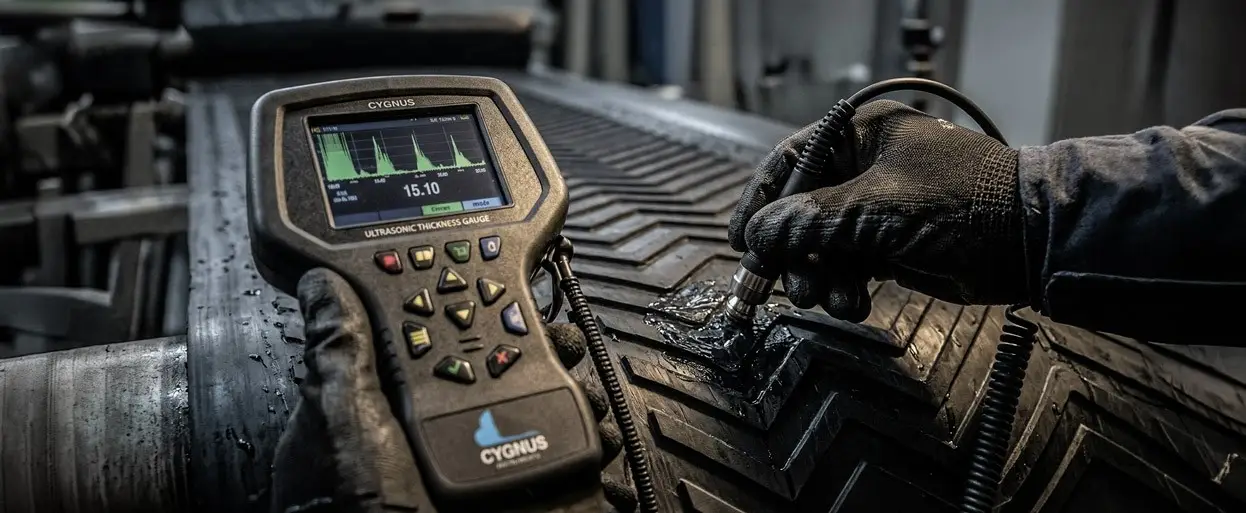
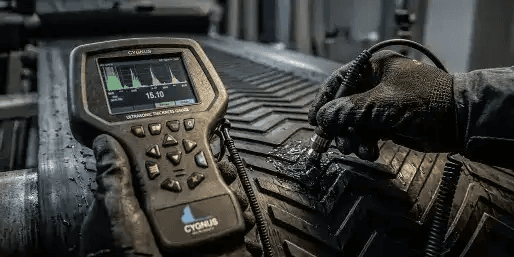
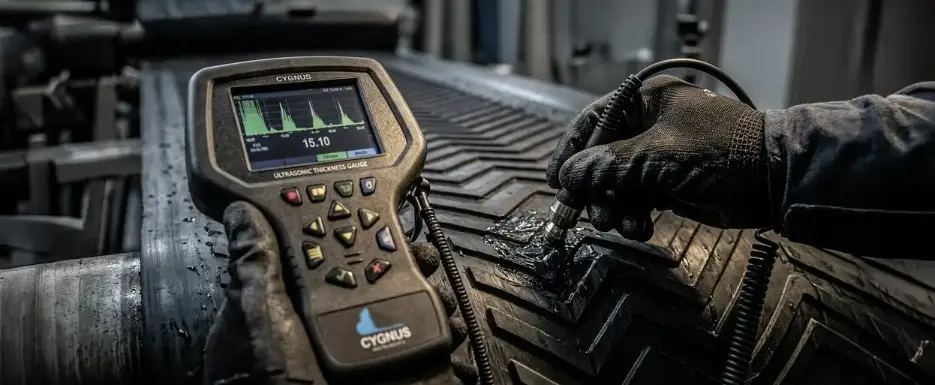
Cygnus 1 EX Intrinsically Safe Ultrasonic Thickness Gauge
ATEX/IECEx certified — Zone 0 explosive atmosphere approved
Measures through coatings up to 20mm thick (paint, epoxy, rubber lagging)
Multiple-echo technique eliminates coating transit time error
No hot work permit required. No stripping. No production stoppage.
Applications: rubber-lagged conveyor pulleys, coated pipework, insulated vessels
Applicable codes
ASME Section V Art. 4 & 5 · ISO 17640 · API 570 · API 579 · ASME Section VIII
Conventional Pulse-Echo UT
Weld flaw detection and wall thickness measurement
Precision to ±0.1mm
Applicable to welds, pressure vessels, piping, storage tanks, structural steel
Code: ASME Section V Articles 4 & 5 / ISO 17640
What UT detects
Wall thinning · Internal cracks · Delaminations · Lack of fusion · Corrosion mapping · Remaining life assessment
Through-Coating / Through-Lagging Measurement
Cygnus 1 EX Intrinsically Safe Ultrasonic Thickness Gauge
ATEX/IECEx certified — Zone 0 explosive atmosphere approved
Measures through coatings up to 20mm thick (paint, epoxy, rubber lagging)
Multiple-echo technique eliminates coating transit time error
No hot work permit required. No stripping. No production stoppage.
Applications: rubber-lagged conveyor pulleys, coated pipework, insulated vessels
Applicable codes
ASME Section V Art. 4 & 5 · ISO 17640 · API 570 · API 579 · ASME Section VIII
Conventional Pulse-Echo UT
Weld flaw detection and wall thickness measurement
Precision to ±0.1mm
Applicable to welds, pressure vessels, piping, storage tanks, structural steel
Code: ASME Section V Articles 4 & 5 / ISO 17640
Through-Coating / Through-Lagging Measurement
Cygnus 1 EX Intrinsically Safe Ultrasonic Thickness Gauge
ATEX/IECEx certified — Zone 0 explosive atmosphere approved
Measures through coatings up to 20mm thick (paint, epoxy, rubber lagging)
Multiple-echo technique eliminates coating transit time error
No hot work permit required. No stripping. No production stoppage.
Applications: rubber-lagged conveyor pulleys, coated pipework, insulated vessels
What UT detects
Wall thinning · Internal cracks · Delaminations · Lack of fusion · Corrosion mapping · Remaining life assessment
Applicable codes
ASME Section V Art. 4 & 5 · ISO 17640 · API 570 · API 579 · ASME Section VIII
Conventional Pulse-Echo UT
Weld flaw detection and wall thickness measurement
Precision to ±0.1mm
Applicable to welds, pressure vessels, piping, storage tanks, structural steel
Code: ASME Section V Articles 4 & 5 / ISO 17640
What UT detects
Wall thinning · Internal cracks · Delaminations · Lack of fusion · Corrosion mapping · Remaining life assessment
Through-Coating / Through-Lagging Measurement
Cygnus 1 EX Intrinsically Safe Ultrasonic Thickness Gauge
ATEX/IECEx certified — Zone 0 explosive atmosphere approved
Measures through coatings up to 20mm thick (paint, epoxy, rubber lagging)
Multiple-echo technique eliminates coating transit time error
No hot work permit required. No stripping. No production stoppage.
Applications: rubber-lagged conveyor pulleys, coated pipework, insulated vessels
Applicable codes
ASME Section V Art. 4 & 5 · ISO 17640 · API 570 · API 579 · ASME Section VIII
Managing a Piping or Vessel Integrity Programme?
Managing a Piping or Vessel Integrity Programme?
Glospech provides ongoing UT thickness surveys with documented trending – giving you the data to plan maintenance before failures occur. API 570 compliant. Fully reportable. One consistent team, every inspection.
Glospech provides ongoing UT thickness surveys with documented trending – giving you the data to plan maintenance before failures occur. API 570 compliant. Fully reportable. One consistent team, every inspection.
What Makes Glospech UT Different
What Makes Glospech UT Different
What Makes Glospech UT Different

Level III Procedure Authority
Every UT procedure is written and approved by an in-house Level III technician. No outsourced sign-off, no delays, full accountability from scope to report.
Certified Level II Inspectors
Every examination is performed and evaluated by ISO 9712 / SNT-TC-1A qualified Level II technicians, supported by in-house Level III oversight.
Certified Level II Inspectors
Every examination is performed and evaluated by ISO 9712 / SNT-TC-1A qualified Level II technicians, supported by in-house Level III oversight.

Through-Coating. No Stripping.
Wall thickness measurement through paint, epoxy, and rubber lagging up to 20mm – no removal, no downtime, no hot work permit required.
Through-Coating. No Stripping.
Wall thickness measurement through paint, epoxy, and rubber lagging up to 20mm – no removal, no downtime, no hot work permit required.
Through-Coating. No Stripping.
Wall thickness measurement through paint, epoxy, and rubber lagging up to 20mm – no removal, no downtime, no hot work permit required.

24-Hour Reports
Standard inspection reports within 24 hours of site completion. Certified regulatory reports for AIA submission: 3–5 business days.
24-Hour Reports
Standard inspection reports within 24 hours of site completion. Certified regulatory reports for AIA submission: 3–5 business days.
24-Hour Reports
Standard inspection reports within 24 hours of site completion. Certified regulatory reports for AIA submission: 3–5 business days.

API 570 Programmes
Ongoing piping inspection programmes with thickness trending for documented fitness-for-service decisions.
API 570 Programmes
Ongoing piping inspection programmes with thickness trending for documented fitness-for-service decisions.
API 570 Programmes
Ongoing piping inspection programmes with thickness trending for documented fitness-for-service decisions.

Zone 0 Capability
ATEX-certified Cygnus 1 EX approved for explosive atmospheres.
Zone 0 Capability
ATEX-certified Cygnus 1 EX approved for explosive atmospheres.
Zone 0 Capability
ATEX-certified Cygnus 1 EX approved for explosive atmospheres.
Field Case Study
Field Case Study
Field Case Study
Field Case Study
Measuring Through Rubber Lagging – Zero Downtime, Full Data
Measuring Through Rubber Lagging – Zero Downtime, Full Data
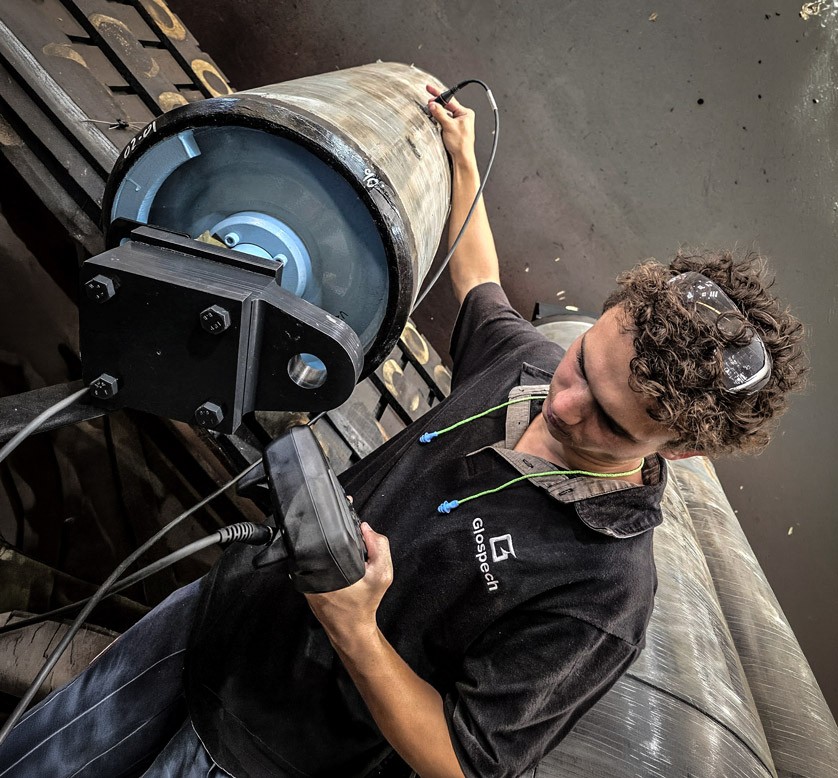
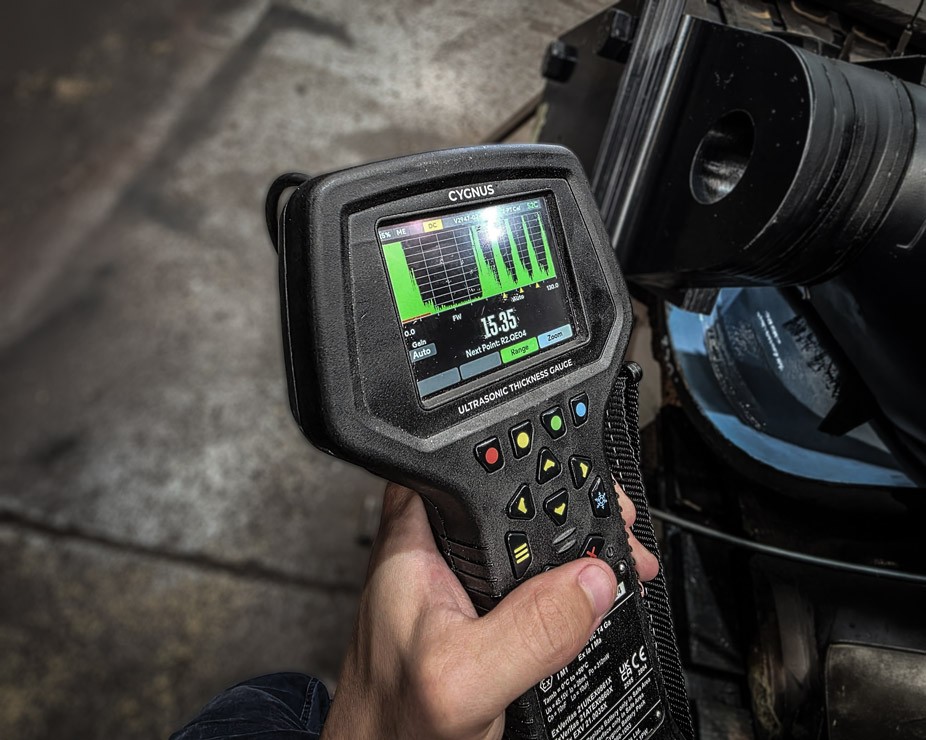
A mining client needed wall thickness data on conveyor pulleys covered in 20mm rubber lagging. Conventional inspection would have required lagging removal – costing days of downtime, significant labour, and lagging replacement costs.
Using the Cygnus 1 EX Intrinsically Safe Ultrasonic Thickness Gauge with Multiple-Echo technology, Glospech measured through the rubber directly. No stripping. No hot work. No production stoppage.
Results:
Accurate wall thickness readings through 20mm rubber
Zero downtime for stripping or re-lagging
Intrinsically safe execution – suitable for hazardous environments
Full data set for predictive maintenance trending
How It Works
How It Works
How It Works
From First Call to Final Report in 4 Steps
From First Call to Final Report in 4 Steps
From First Call to Final Report
STEP 1
Scope Review
Method selection (conventional pulse-echo UT or through-coating measurement), applicable code requirements, access planning, and hazardous area classification confirmed before mobilisation.
STEP 1
Scope Review
Method selection (conventional pulse-echo UT or through-coating measurement), applicable code requirements, access planning, and hazardous area classification confirmed before mobilisation.
STEP 2
Procedure Development
Written UT procedure per ASME Section V / ISO 17640, signed off by Level III technician. No inspection commences without an approved written procedure.
STEP 2
Procedure Development
Written UT procedure per ASME Section V / ISO 17640, signed off by Level III technician. No inspection commences without an approved written procedure.
STEP 2
Procedure Development
Level III approved heating procedure specifying soak temperature, heating and cooling rates, and thermocouple placement – per ASME requirements.
STEP 3
On-Site Execution
Calibration verification, systematic examination per approved procedure, real-time data capture – A-scan, B-scan, or S-scan depending on method.
STEP 3
On-Site Execution
Calibration verification, systematic examination per approved procedure, real-time data capture – A-scan, B-scan, or S-scan depending on method.
STEP 4
Report and Data
Digital records, scan images, thickness maps, and accept/reject evaluation per specified acceptance criteria. AIA-ready documentation as required.
STEP 4
Report and Data
Digital records, scan images, thickness maps, and accept/reject evaluation per specified acceptance criteria. AIA-ready documentation as required.
STEP 4
Report and Data
Digital records, scan images, thickness maps, and accept/reject evaluation per specified acceptance criteria. AIA-ready documentation as required.
STEP 1
Scope Review
Method selection (conventional pulse-echo UT or through-coating measurement), applicable code requirements, access planning, and hazardous area classification confirmed before mobilisation.
STEP 3
On-Site Execution
Calibration verification, systematic examination per approved procedure, real-time data capture – A-scan, B-scan, or S-scan depending on method.
STEP 2
Procedure Development
Written UT procedure per ASME Section V / ISO 17640, signed off by Level III technician. No inspection commences without an approved written procedure.
STEP 4
Report and Data
Digital records, scan images, thickness maps, and accept/reject evaluation per specified acceptance criteria. AIA-ready documentation as required.
STEP 1
Scope Review
Method selection (conventional pulse-echo UT or through-coating measurement), applicable code requirements, access planning, and hazardous area classification confirmed before mobilisation.
STEP 3
On-Site Execution
Calibration verification, systematic examination per approved procedure, real-time data capture – A-scan, B-scan, or S-scan depending on method.
STEP 2
Procedure Development
Written UT procedure per ASME Section V / ISO 17640, signed off by Level III technician. No inspection commences without an approved written procedure.
STEP 4
Report and Data
Digital records, scan images, thickness maps, and accept/reject evaluation per specified acceptance criteria. AIA-ready documentation as required.
FAQ
FAQ
FAQ
Answers to the Questions Our Clients Ask First
Answers to the Questions Our Clients Ask First
What is ultrasonic testing and how does it detect internal flaws?
Can you measure wall thickness without removing coatings or lagging?
Is your UT equipment approved for use in hazardous areas (ATEX / Zone 0)?
What codes govern Glospech's ultrasonic testing procedures?
Do you offer ongoing corrosion monitoring and thickness trending?
What is the minimum wall thickness your equipment can measure?
When should I use ultrasonic testing instead of radiographic testing?
Contact Us
Get Your Free NDT Inspection Quote.
Response Within 24 Hours. No Obligation.
✓ B-BBEE Level 2 Certified
✓ ISO Triple Certified (9001/14001/45001)
✓ Same-Day Quotations
Contact Us
Get Your Free NDT Inspection Quote.
Response Within 24 Hours. No Obligation.
✓ B-BBEE Level 2 Certified
✓ ISO Triple Certified (9001/14001/45001)
✓ Same-Day Quotations
Contact Us
Get Your Free NDT Inspection Quote.
Response Within 24 Hours. No Obligation.
✓ B-BBEE Level 2 Certified
✓ ISO Triple Certified (9001/14001/45001)
✓ Same-Day Quotations
Contact Us
Get Your Free NDT Inspection Quote.
Response Within 24 Hours. No Obligation.
✓ B-BBEE Level 2 Certified
✓ ISO Triple Certified (9001/14001/45001)
✓ Same-Day Quotations
Contact Us
Get Your Free NDT Inspection Quote.
Response Within 24 Hours. No Obligation.
✓ B-BBEE Level 2 Certified
✓ ISO Triple Certified (9001/14001/45001)
✓ Same-Day Quotations
Contact Us
Get Your Free NDT Inspection Quote.
Response Within 24 Hours. No Obligation.
✓ B-BBEE Level 2 Certified
✓ ISO Triple Certified (9001/14001/45001)
✓ Same-Day Quotations
Contact Us
Get Your Free NDT Inspection Quote.
Response Within 24 Hours. No Obligation.
✓ B-BBEE Level 2 Certified
✓ ISO Triple Certified (9001/14001/45001)
✓ Same-Day Quotations
© 2025 Glospech (Pty) Ltd. All rights reserved
© 2025 Glospech (Pty) Ltd. All rights reserved